
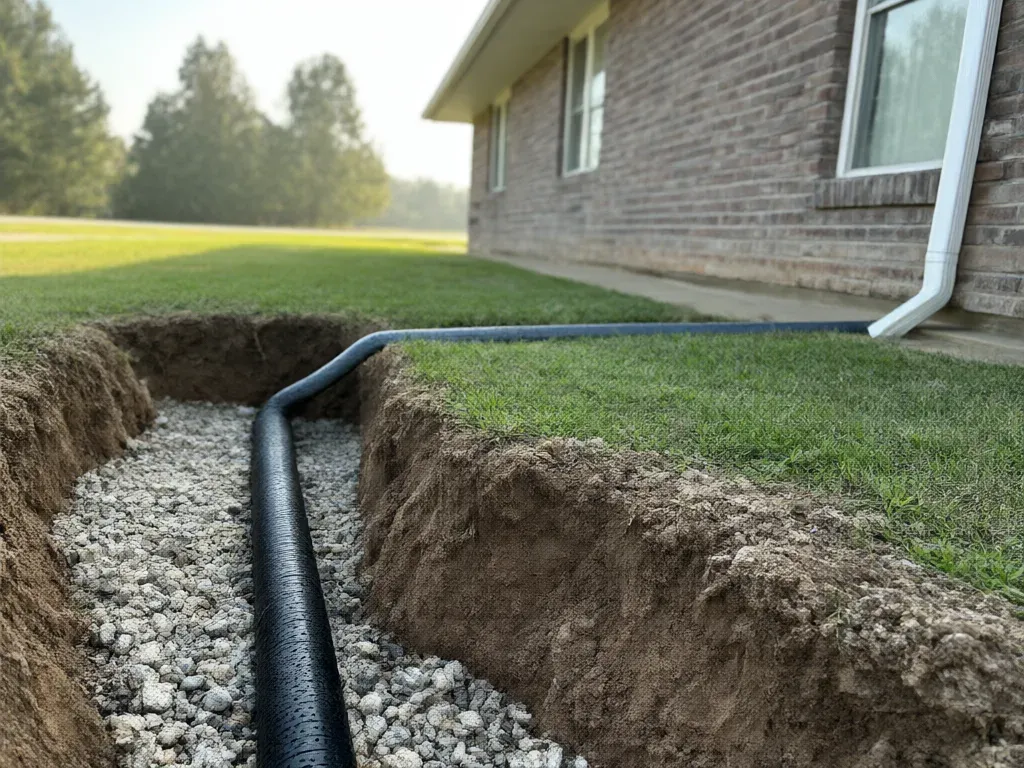
Foundation Drainage and Water Management in Pearland, TX
Pearland Superior Foundation Repair offers professional foundation drainage and water management in Pearland, TX with a 5-year workmanship warranty on every drainage job. We install French drains, buried downspout lines, surface drains with pop-up emitters, yard regrading and root barriers to keep water from soaking the clay under your slab. Plenty of our inspections end with a drainage fix instead of piers.
Foundation drainage is the cheapest foundation repair there is, and on flat, slow-draining clay it's often the most important one. We design the water plan around your lot: where the roof drains, where the beds hold water, and where the yard has no fall. French drains run $38 to $65 per linear foot, and downspout lines run $22 to $38 per linear foot.
Get a FREE Estimate
Or call (346) 586-8503
Foundation Drainage Solutions
Foundation French Drains
A trench 12 to 18 inches deep, lined with fabric and filled with washed gravel around 4-inch perforated pipe, pitched at least 1/8 inch per foot. It catches water moving toward the slab through the soil and carries it somewhere it can leave the lot.
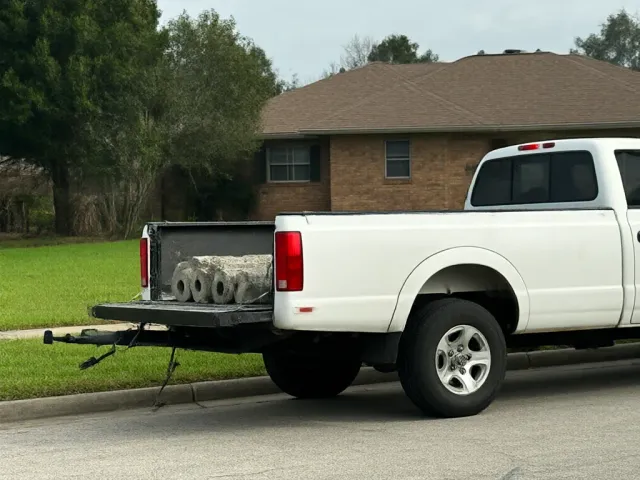
Foundation Downspout Drainage Lines
Downspouts dumping against the grade beam are the most common cause of a single dropped corner we see. We bury 4-inch solid pipe from each downspout to a pop-up emitter at least 10 feet out.
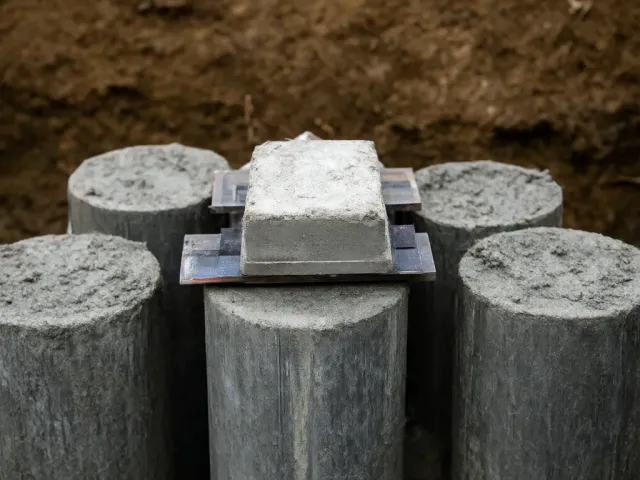
Foundation Surface Drains and Catch Basins
Low spots where water stands after a storm get a catch basin tied into a solid line. It's how we handle narrow side yards between houses, where there's no room to regrade.
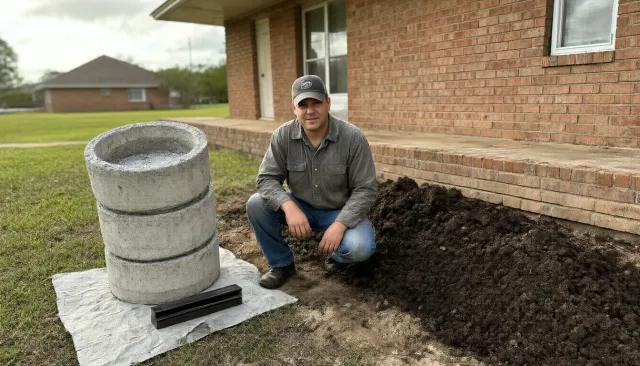
Foundation Grading and Bed Regrading
Flower beds built up against the brick behind edging that holds water are a slab problem. We regrade to 6 inches of fall in the first 10 feet where the lot allows it, and lower beds that trap water against the beam.
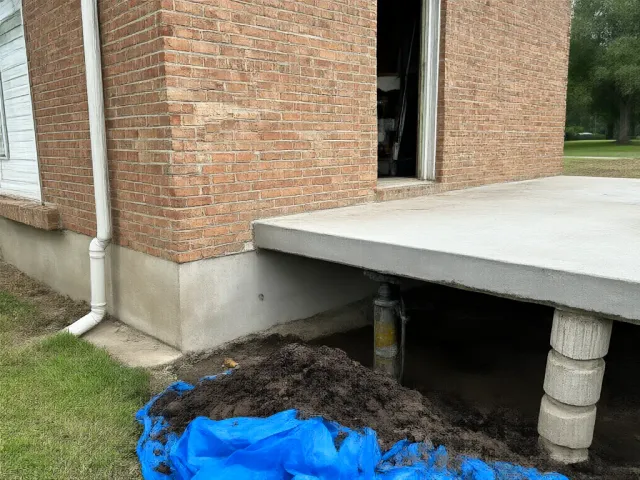
Foundation Root Barriers
A root barrier set 24 to 36 inches deep between a large tree and the slab keeps roots from drying out the clay under the beam. It runs $25 to $40 per linear foot, and the tree stays.
Before and After
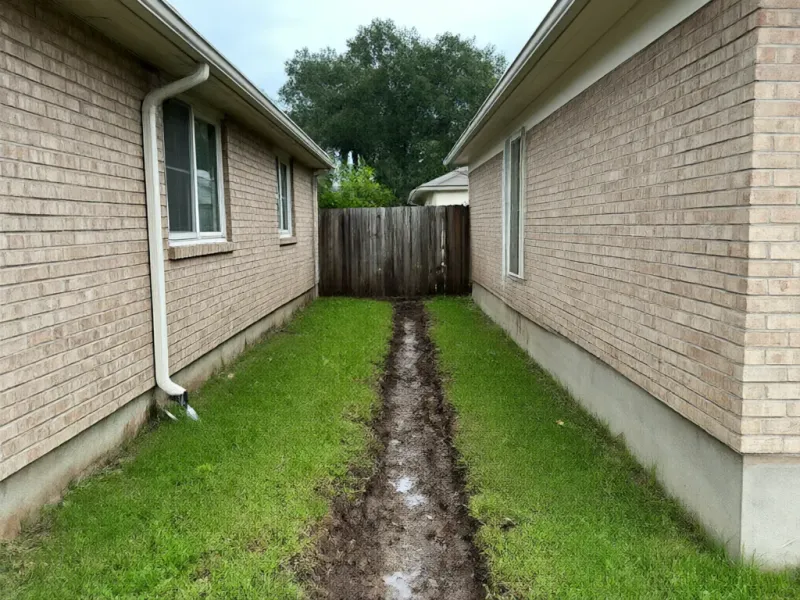
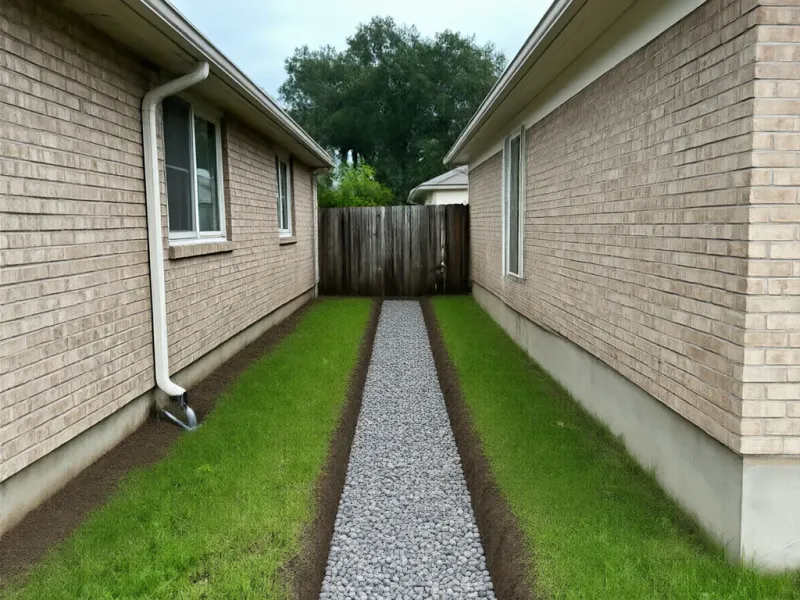
How Water Moves a Foundation on Flat Clay
On a lot with no fall, rain doesn't run off. It soaks in close to wherever it lands, and around a house that's the drip line and the downspouts. The clay swells there and stays swollen while the rest of the slab dries.
Then summer flips it. The clay that was soaked dries out and shrinks, and the corner that heaved in spring settles in August. A slab riding that cycle twice a year cracks at its weakest point.
The goal of foundation drainage isn't a dry lot. It's an even one. Steady moisture all the way around the slab is what keeps it from rocking.
Why Watering Matters Too
In a long dry spell, a soaker hose 12 to 18 inches out from the slab keeps the clay from pulling away. It sounds backward after all this talk about drainage, but the clay needs steady moisture, not a flood followed by a drought.
Signs You Have a Drainage Problem, Not Just a Foundation Problem
Water standing near the slab more than a day after rain. Mulch washed out of a bed in a line under the roof edge. A downspout ending in a splash block right against the brick.
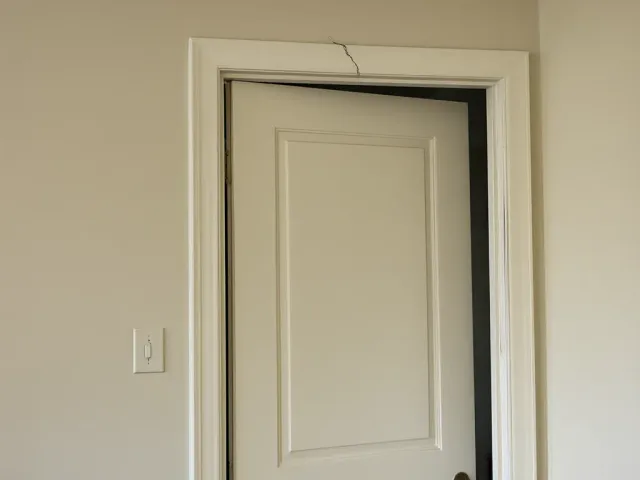
Soil pulled away from the grade beam on one side of the house and mud against it on the other is a strong sign. So is a crack pattern that lines up with the one corner where two roof planes dump into the same gutter.
If your floor reads under 1 inch across the house and the cracks aren't growing, drainage may be the whole job. We'll say so on the inspection.
Why We Fix Drainage Alongside Piers
Piers carry the beam below the active clay, but the soil inside the perimeter still reacts to water. A house with new pilings and a downspout still dumping at the corner can crack interior tile even though the beam holds.
So when we pier a house, we look at where the water goes. Sometimes drainage is a small add-on. Sometimes it's the reason the house moved in the first place, and fixing it protects the repair you just paid for.
How We Plan and Install Foundation Drainage
Watch the water
We walk the lot, mark every downspout and low spot, and check the grade with a level. Photos from the last heavy rain help.
Draw the plan
You get a sketch showing pipe runs, emitters, catch basins and regrading, with linear-foot pricing on each run.
Locate and dig
Texas 811 marks the utilities at least 48 hours before we dig. Sod gets cut and set aside, not buried.
Install and flow-test
We install the pipe at a measured slope and run a hose through every line to confirm it reaches the emitter.
Restore and warranty
We backfill the trenches and replace the sod. Your job includes a 5-year workmanship warranty.
Foundation Drainage Questions
Can drainage alone fix my foundation?
It depends. If you have under 1 inch of difference and the cracks aren't growing, you might just need to fix the water and use a soaker hose during dry spells. If you see over 1.5 inches of movement and doors are sticking, you'll likely need piers too.
Do I need a French drain or just downspout lines?
Most houses need downspout lines first, because the roof is the biggest single source of water near the slab. French drains are for water moving through the soil, usually from a higher yard next door or a side yard.
Where does all the water go?
Lines go to a pop-up emitter at least 10 feet from the slab, to the street if permitted, or to a lower area of the yard. We plan the discharge point before we start digging.
Will a French drain dry my foundation out too much?
Not if we place it right. We set the line to catch water moving toward the house instead of draining the soil from under the slab. Keep a soaker hose 12 to 18 inches out during dry summers.
Is drainage work warrantied?
Yes. Every drainage job carries a 5-year workmanship warranty. If a line we installed clogs or separates, we come back and fix it.
Get a Drainage Plan for Your Lot
Call (346) 586-8503. We'll walk the lot, show you where the water goes and price the fix by the linear foot.