
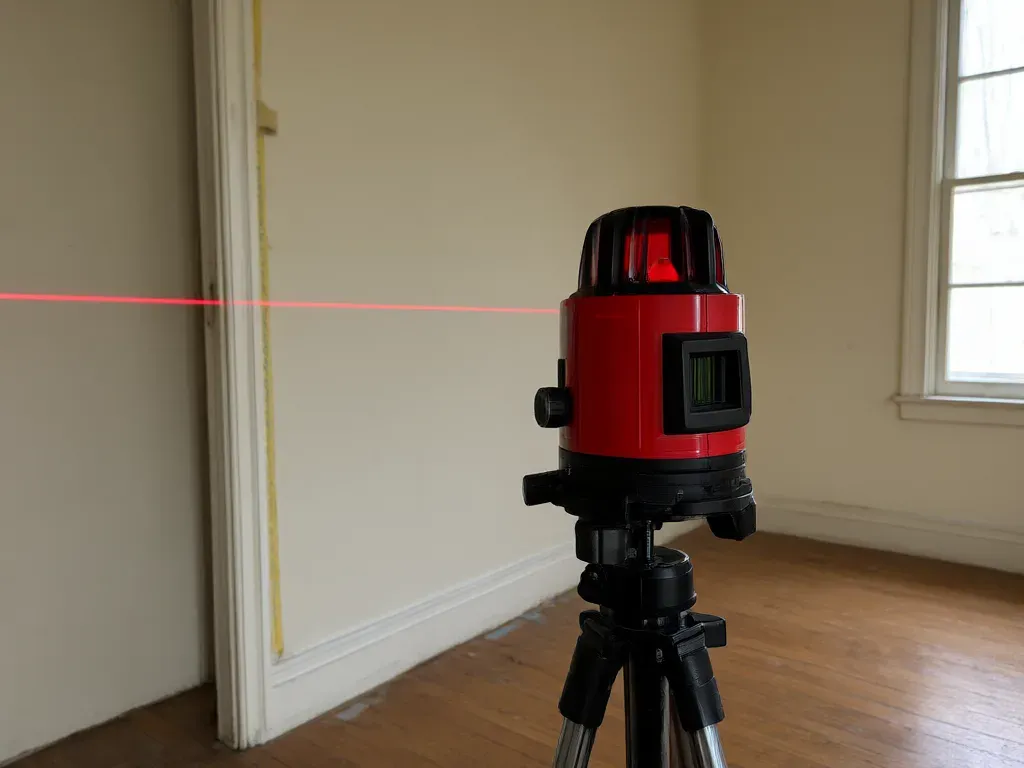
House Leveling in Pearland, TX
Pearland Superior Foundation Repair offers professional house leveling in Pearland, TX with 2,450+ foundations repaired since 2009. We level slab homes and pier and beam houses with hydraulic rams on pressed concrete pilings, bell-bottom piers or sound existing piers, with a digital manometer reading through every step of the lift. Once the house reaches the best practical level, steel shims lock it there.
House leveling, home leveling and floor leveling all describe the same day: the lift. It's the part of foundation repair where experience matters most, because a house raised too far or too fast cracks tile, drywall and plumbing. We lift in small increments on every pier at once, stop at the level the engineer approves, then run a static test on the drains.
Get a FREE Estimate
Or call (346) 586-8503
House Leveling Options
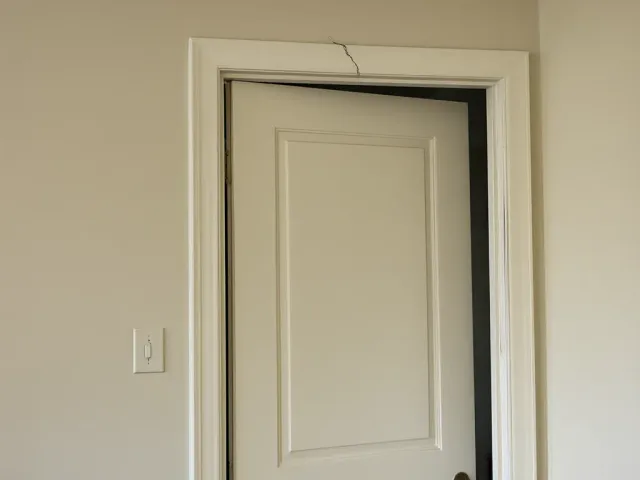
House Leveling for Slab Homes
Rams sit on pressed concrete pilings under the grade beam, and the slab rises as one piece. Most slab lifts are done in 1 to 3 days, with the plumbing test the same week.
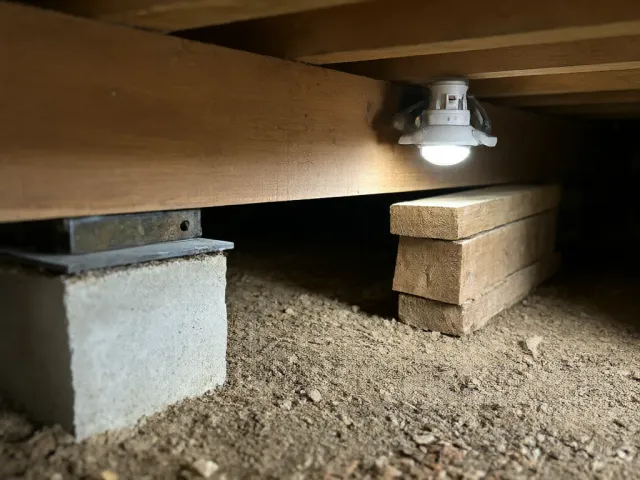
House Leveling for Pier and Beam Homes
Jacks go under the beams in the crawl space, the floor comes up, and the old shims get replaced with steel. A shim re-level runs $950 to $2,800, and most take 1 to 2 days.
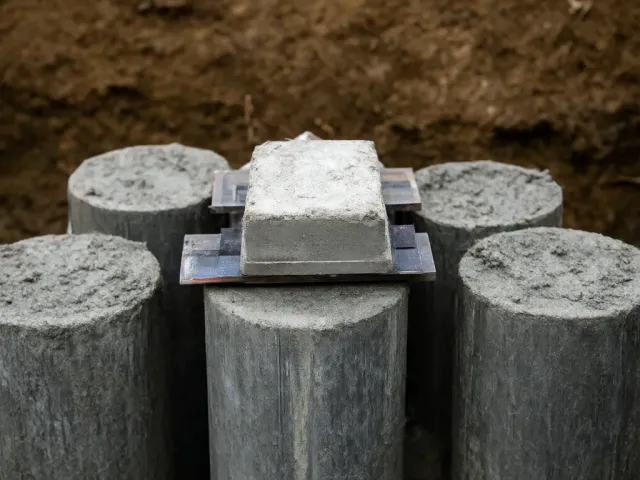
House Leveling for Previously Repaired Homes
If another company's piers have settled, we dig to them, check the depth, re-shim the sound ones and replace shallow spot blocks. Any pier we installed that settles gets re-adjusted at no charge for as long as the house stands.
House Leveling for Additions and Split Slabs
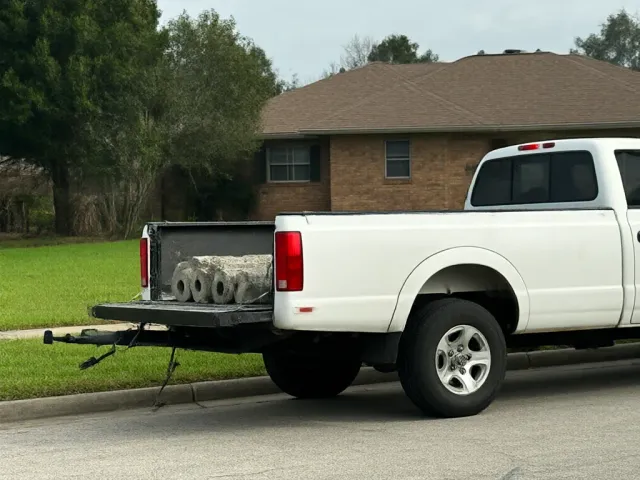
Room additions often sit on a separate slab that settles differently from the original house. We pier the addition's beam, often with bell-bottom piers, and lift it back in line with the main slab.
Partial House Leveling for One Corner
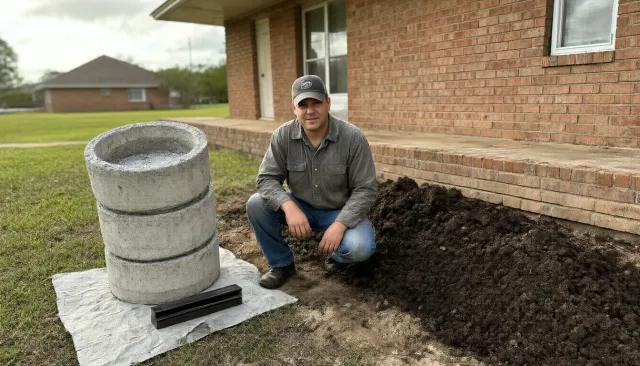
Plenty of houses only drop on one corner. A partial repair of 8 to 14 pilings, $3,800 to $7,500, lifts that section without touching the rest of the slab.
Before and After
How Far Should a House Be Leveled?
Not to zero. Slabs are rarely poured dead flat, and a house that has sat low on one corner for years has settled into it: door frames racked, tile laid over the slope, drain lines bent to fit. Force all of that back to perfectly flat and something breaks.
The engineer sets the target, and we lift to the best practical level within it. Sometimes that's most of the way back. Sometimes it's stopping short because the manometer shows the slab starting to bend instead of rise.
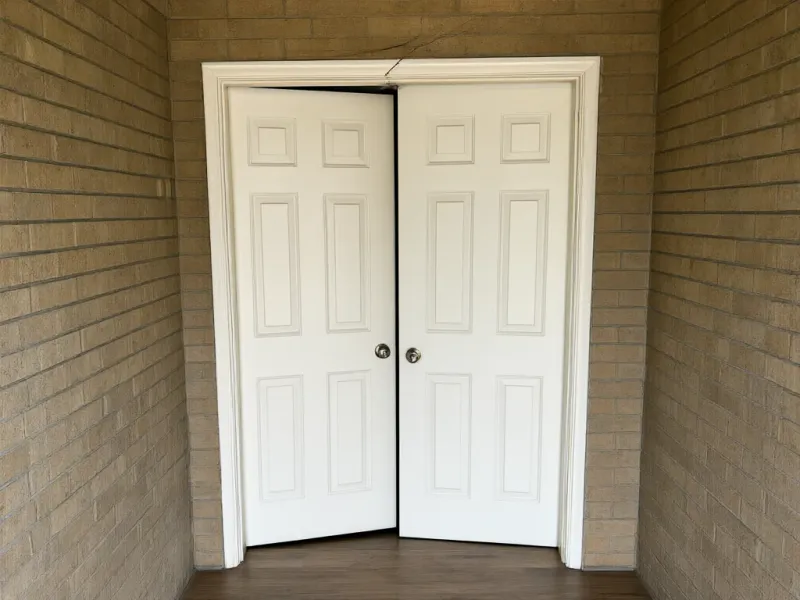
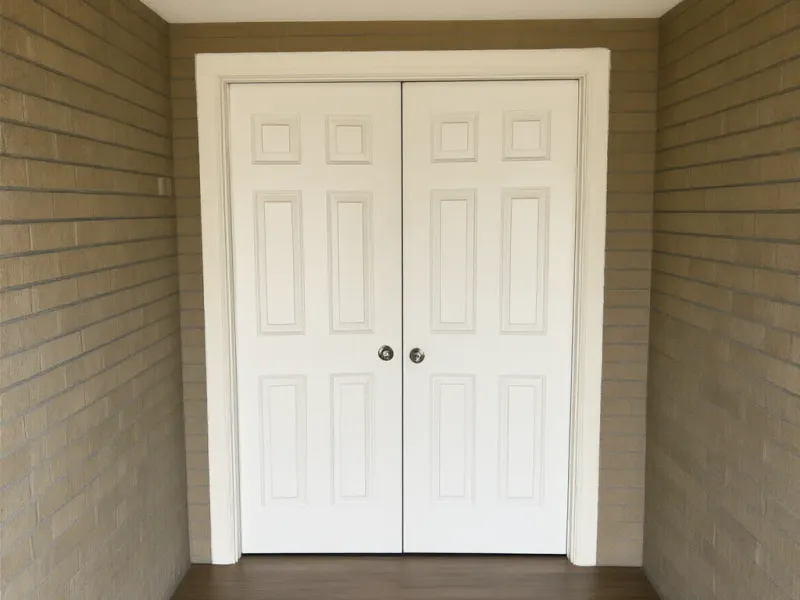
You'll see the before and after readings. We read on a grid every 8 to 10 feet, so you can compare room by room.
What Happens During a House Leveling Lift
Most of the drama people expect never happens. Here's how the day actually goes.
Before the Lift
Piers are in, rams are set on every one, and the manometer base goes somewhere that isn't moving. We'll ask you to take pictures off the walls on the side being lifted and leave cabinet doors open so nothing gets pinched.
During the Lift
Crews raise every pier together in small steps, calling readings back and forth. You'll hear some creaks and pops, which is the house adjusting. If one reading moves faster than the rest, we stop and look before going on.
After the Lift
Steel shims lock the beam at final level. Then the drains get plugged at the cleanout, filled and watched for 15 minutes, and the supply lines go on a pressure gauge.
Signs Your House Needs Leveling
Doors that won't latch or swing on their own. Cabinet doors that drift open. A gap at the top of a door frame that's wider on one side. Floors where a marble rolls to one wall.
On pier and beam homes you'll feel it: soft spots, a slope toward the kitchen, a bounce near the tub. On slab homes you'll see it in cracked tile lines and stair-step cracks in the brick.
Our rule of thumb: under 1 inch across the house with no new cracks, watch it and fix the water. Over 1.5 inches with sticking doors or fresh cracks, get the engineer out.
Our House Leveling Process
Baseline readings
We shoot the whole house with the manometer on a grid every 8 to 10 feet and mark the high point.
Engineer's target
An independent engineer reviews the readings and sets the pier plan and the lift target.
Piers and setup
Piers go in to the plan, and a ram gets set on every one of them.
Incremental lift
We raise all the piers together in small steps, watching readings until we hit the target or the slab's limit.
Shims, test and final readings
Steel shims go in, the drains get static-tested, and you get before-and-after readings with your warranty.
House Leveling Questions
Will house leveling crack my walls?
It can open some existing hairline cracks and close others. Lifting slowly on every pier at once keeps new damage rare. A little drywall touch-up after a lift is normal and usually cosmetic.
Can you level a house without piers?
Not a slab house, not for long. Without piers, the beam is still sitting on clay that moves. A pier and beam home can sometimes be leveled with shims alone if the existing piers are sound.
How long does it take to level a house?
Most slab lifts take 1 to 3 days, and pier and beam re-levels take 1 to 2 days. Signed jobs usually start in 7 to 10 days, after the permit and the utility locate.
Can I stay home during the lift?
Yes, and most people do. We'll just ask you to take pictures and fragile items off the walls on the side being lifted.
My house was leveled before and dropped again. Now what?
We dig to the old piers and check how deep they go. Sound piers get re-shimmed, and shallow spot blocks get replaced with pilings pressed to refusal.
Find Out How Far Your House Has Moved
Call (346) 586-8503 for a free foundation inspection with a full manometer survey. You'll see every reading before anyone talks price.