
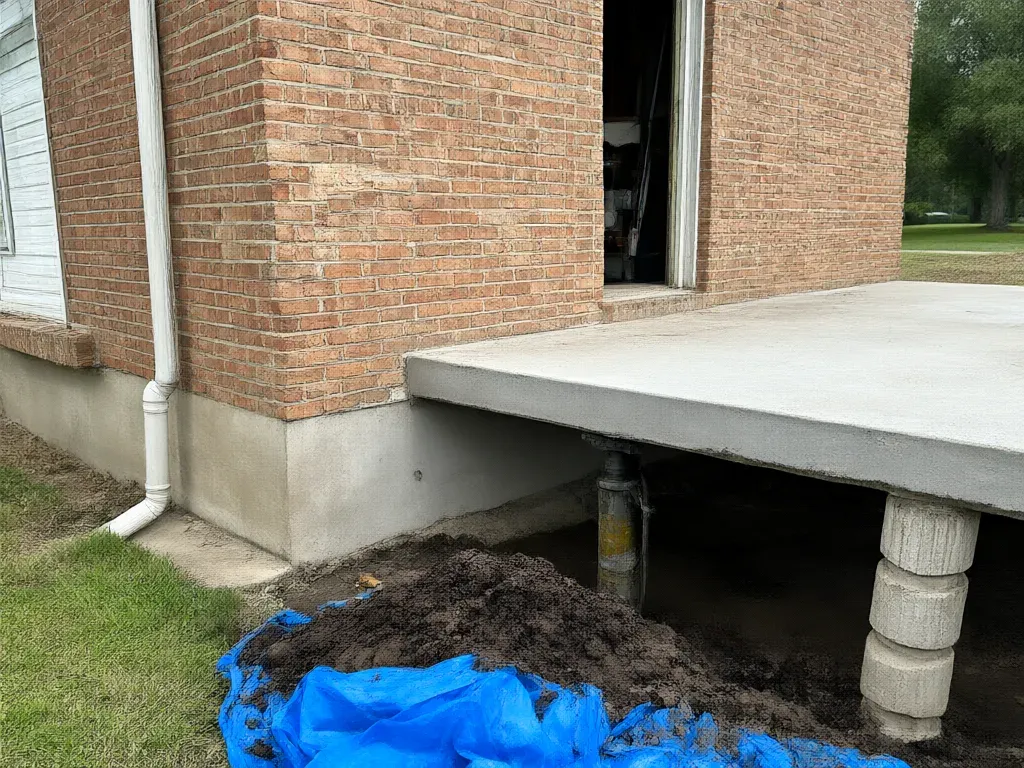
Slab Foundation Repair in Pearland, TX
Pearland Superior Foundation Repair offers professional slab foundation repair in Pearland, TX with 2,450+ foundations repaired since 2009. We lift and stabilize slab-on-grade homes using pressed concrete pilings, drilled bell-bottom piers and steel push piers, then set the grade beam on steel shims. Most slab lifts are done in 1 to 3 days.
Slab repair here is mostly grade beam work: a corner or an edge that dropped as the clay dried and pulled away. We handle slab leveling, interior piering when the middle of the house settles, slab crack repair after the lift, and the static test that tells you whether a drain line broke. Every pier plan comes from an independent licensed engineer, and every pier carries a lifetime transferable warranty.
Get a FREE Estimate
Or call (346) 586-8503
Slab Foundation Repair Methods We Use
The engineer picks the method for each section of beam. Most houses get one, some get two.
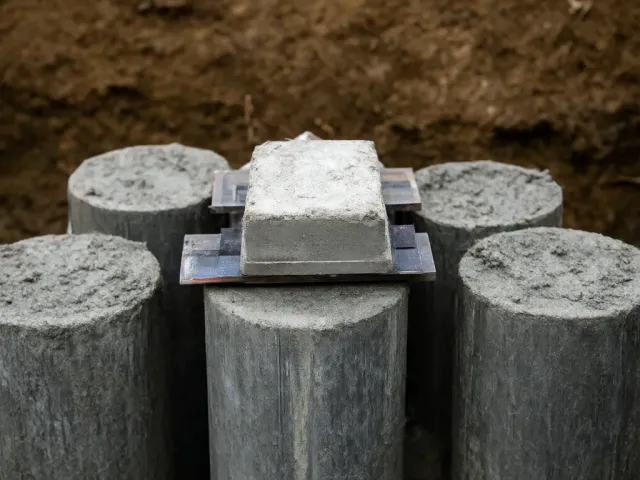
Slab Repair with Pressed Concrete Pilings
The workhorse for single-story slab homes. Precast 6-inch by 12-inch cylinders rated at 5,000 PSI get pressed one at a time under the grade beam until the house's weight stops them. They run $325 to $475 each and go in roughly every 6 to 8 feet along the affected beam.
Slab Repair with Drilled Bell-Bottom Piers
For heavier sections like two-story walls and masonry fireplaces. We drill a 12-inch shaft 10 to 12 feet, flare it to a 24 to 30 inch bell, set a #4 rebar cage and pour 3,000 PSI concrete. Each pier cures at least 7 days before we lift on it.
Slab Repair with Steel Push Piers
When refusal is deep or the load is heavy brick, 2-7/8-inch galvanized steel pipe gets driven through a bracket bolted to the beam, often 20 to 35 feet. At $1,350 to $2,100 each, they go where the engineer calls for them and nowhere else.
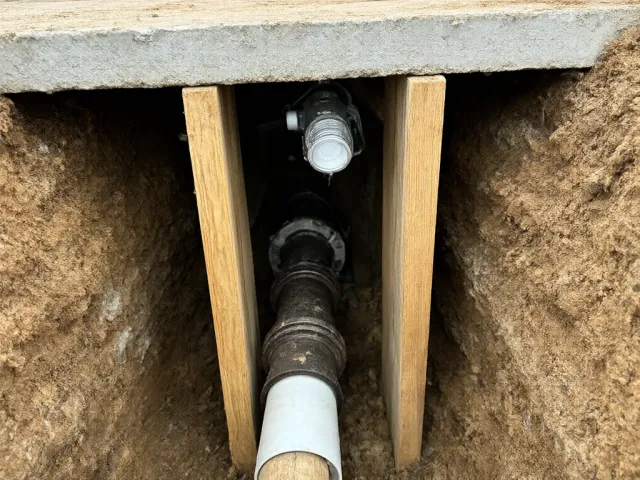
Interior Slab Piering
Sometimes the middle of the house settles, not the edge. The manometer shows it as a low bowl around a hallway or kitchen. We tunnel or core to the interior beams and pier them, so the whole slab comes up together instead of just the perimeter.
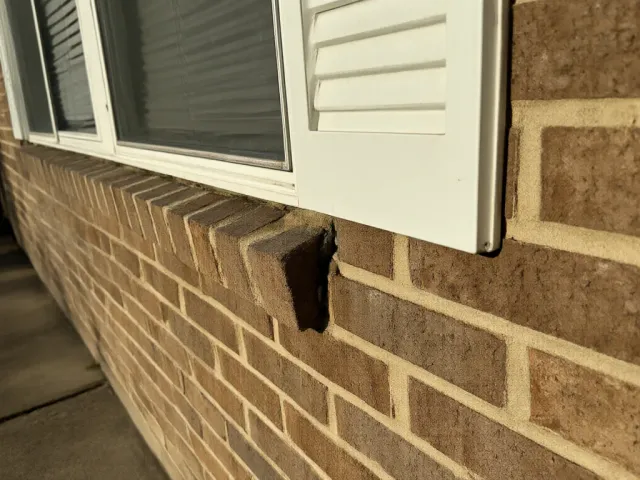
Slab Crack Repair After the Lift
Once the slab is supported, structural cracks in the slab and grade beam get injected with epoxy or polyurethane at $450 to $850 per crack. Hairlines under 1/16 inch usually get left alone because they're shrinkage, not movement.
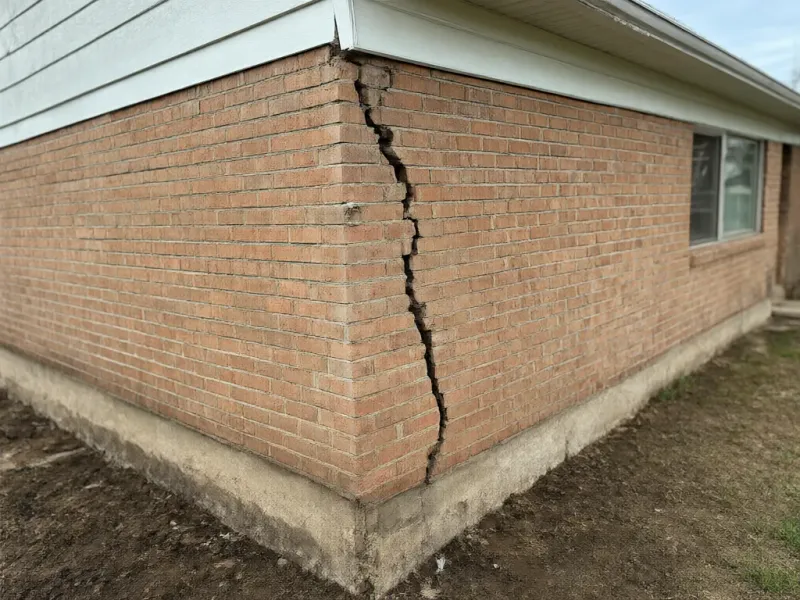
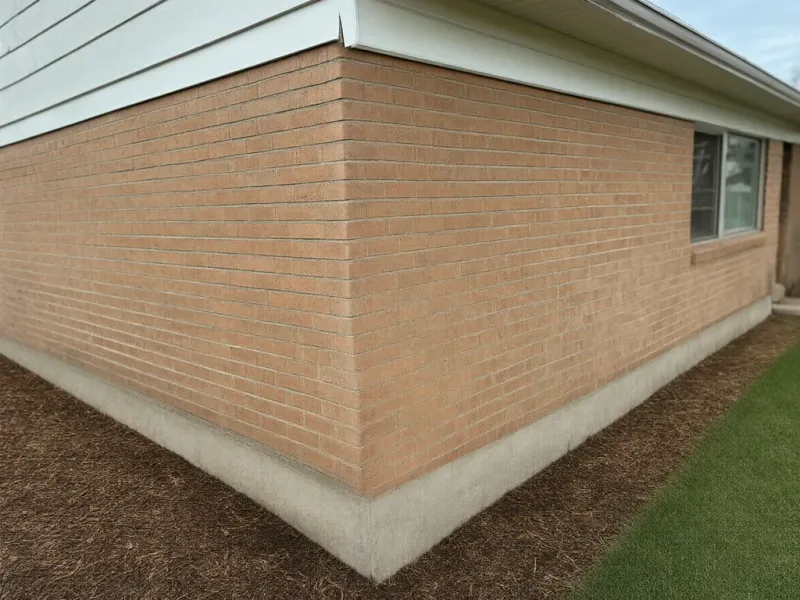
Before and After
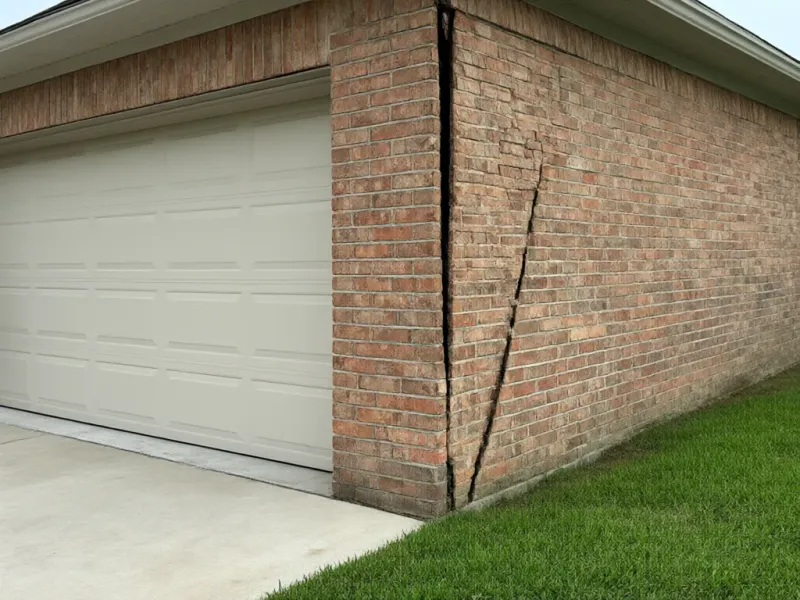
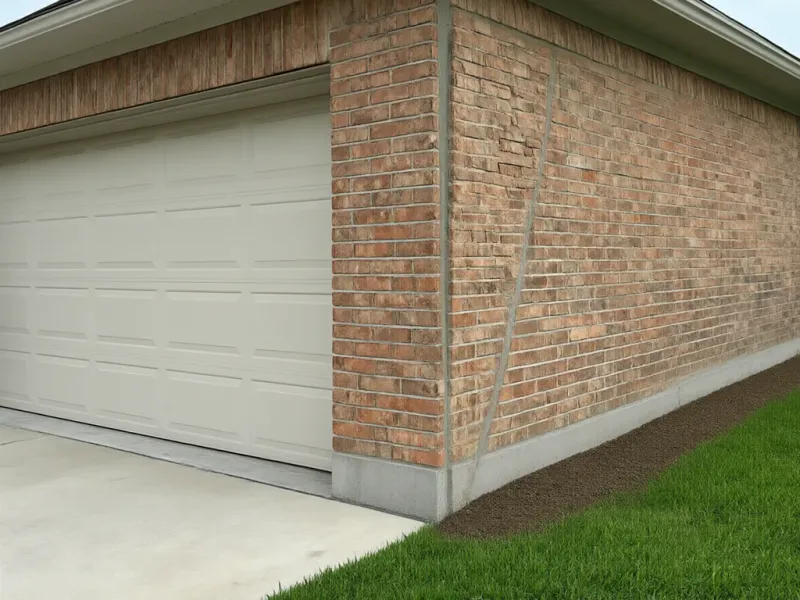
Signs Your Slab Foundation Needs Repair
Slabs rarely fail all at once. They tell you in small ways first: a door that rubs at the top corner, a gap where the baseboard meets the tile, a crack that zigzags up the brick from a window.
The signs that matter are the ones that change. Mark the end of a crack with a pencil and a date. If it's longer in two months, or a door that latched in spring won't latch now, the slab is moving.
Outside the House
Stair-step cracks in brick veneer, a gap opening between the brick and a window frame, and a crack running down the face of the grade beam toward the soil. Soil pulled away from the beam far enough to drop a pencil in is the clay shrinking.
Inside the House
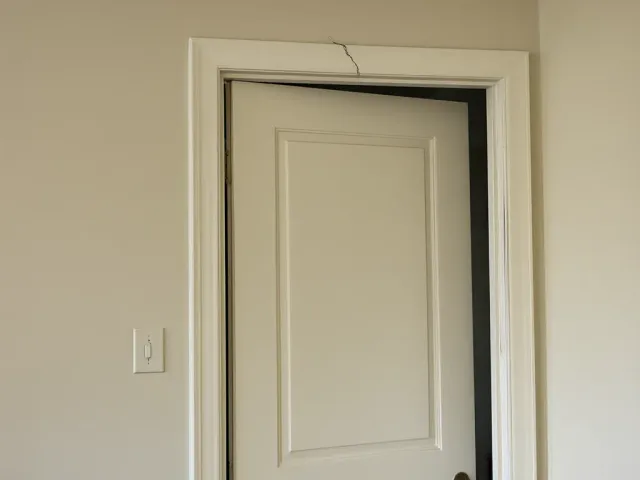
Drywall cracks running at an angle from door and window corners, tile cracking in a line across a room, and doors that swing open or shut on their own. Doors that stick in summer and free up in winter point to seasonal movement.
Why Slabs Move on Pearland Clay
The clay here swells when it's wet and shrinks when it's dry, and your slab sits right on top of it. The perimeter dries first and fastest, especially on the sides that take the afternoon sun. That's why corners drop more than the middle.
Water makes it worse in both directions. A downspout dumping against one corner swells the clay there while the rest of the beam dries out. A slow drain leak under the slab softens the soil until a section settles into it.
Neither a conventionally reinforced slab nor a post-tension slab is built to ride out unlimited soil movement. Piers carry the beam below the active clay so the weather stops moving it. On post-tension slabs, we locate the cable ends at the slab edge before we dig so no tendon gets cut.
Why Homeowners Call Us for Slab Repair
We measure before we sell. Every slab gets a manometer survey on a grid every 8 to 10 feet, read to 0.1 inch, and you see the map before anyone mentions a price.
The engineer is independent. You pay the engineer $350 to $600 directly, and that fee includes the final letter you'll want when you sell. The pier count has no reason to grow.
And we test the plumbing. A slab that moved can crack a drain line, so the static test after every lift is included free. On its own, it's $350 flat.
How a Slab Foundation Repair Runs
Survey and engineer's plan
We map the slab with the manometer, and an independent engineer visits within 3 to 5 business days to write the pier plan.
Permit, locate and layout
We pull the city permit, call Texas 811 at least 48 hours ahead and mark every pier location on the beam. Post-tension cable ends get located before digging.
Excavation and piers
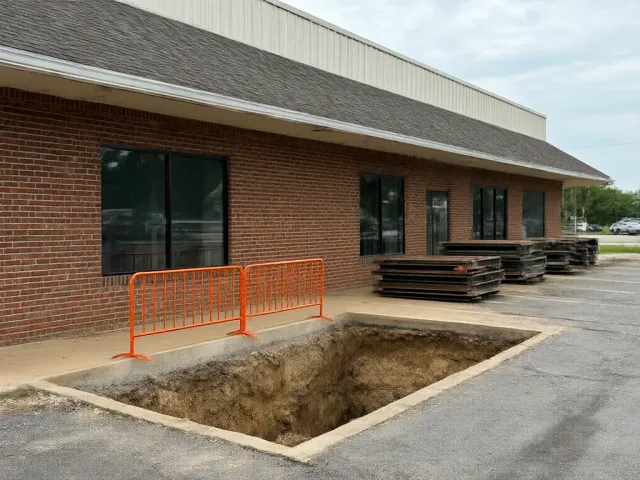
Crews hand-dig access holes at the beam, set the sod aside, and press pilings or drill bell-bottoms to the plan.
The lift and steel shims
Rams on every pier raise the slab together in small steps while the manometer runs. Steel shims lock the beam at final level.
Static test, backfill and warranty
We watch the drains for 15 minutes, backfill and tamp every hole, replace the sod and hand over the engineer's final letter and your warranty.
Slab Foundation Repair Questions
How many pilings does a slab repair need?
It depends on how much of the beam moved. A partial repair on one or two corners is usually 8 to 14 pilings, $3,800 to $7,500. Full perimeter and interior work on a 2,000-square-foot slab can run 25 to 40 pilings.
Will my slab go back to perfectly level?
Usually not, and you shouldn't want it to. Slabs are rarely poured dead flat, and forcing one to zero cracks tile and drywall. We lift to the best practical level the engineer approves.
Do you have to break up my floors?
Not for perimeter piers. We dig outside at the grade beam. Interior piers need either a small core through the floor or a tunnel from outside, and we'll explain which before we start.
Can you repair a post-tension slab?
Yes. We locate the cable ends at the slab edge before we dig and keep access holes clear of the tendons. The pilings carry the beam the same way they would under a conventional slab.
What happens to my yard?
Sod comes out in pieces and gets set aside, holes get backfilled and tamped, and the sod goes back. Expect a few bare spots that fill back in as the grass recovers.
Get Your Slab Measured for Free
Call (346) 586-8503 for a free foundation inspection. We'll map your slab, show you the readings and tell you whether it needs pilings or just better drainage.